Showing posts with label Business. Show all posts

How To Use Your Emirates ID


Convenient things you can use your Emirates ID for

Pay for petrol, withdraw cash and more 

If you live in the UAE then you must have an Emirates ID (it’s a legal requirement), which means knowing what you can do with one when moving to Dubai is useful information.

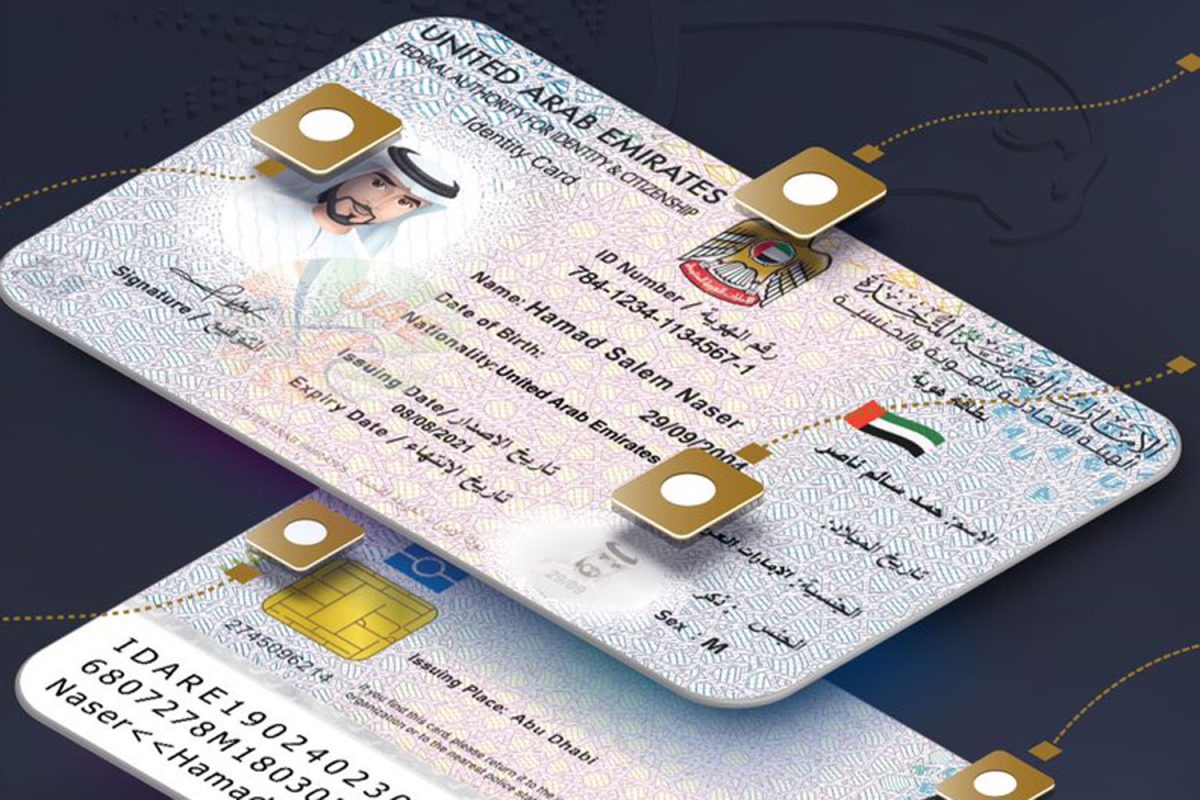
Emirates IDs are issued by the Federal Authority for Identity and Citizenship to all UAE citizens and residents. 

The identity card holds important information in its electronic chip such as the holder’s basic information, photo and biometric data and fingerprints. 

You may have thought that your EID was just a requirement, but did you know that you can use the piece of plastic for a handful of other useful things? Well, you can and here are all the ways how. 

How to use your Emirates ID to withdraw money from an ATM

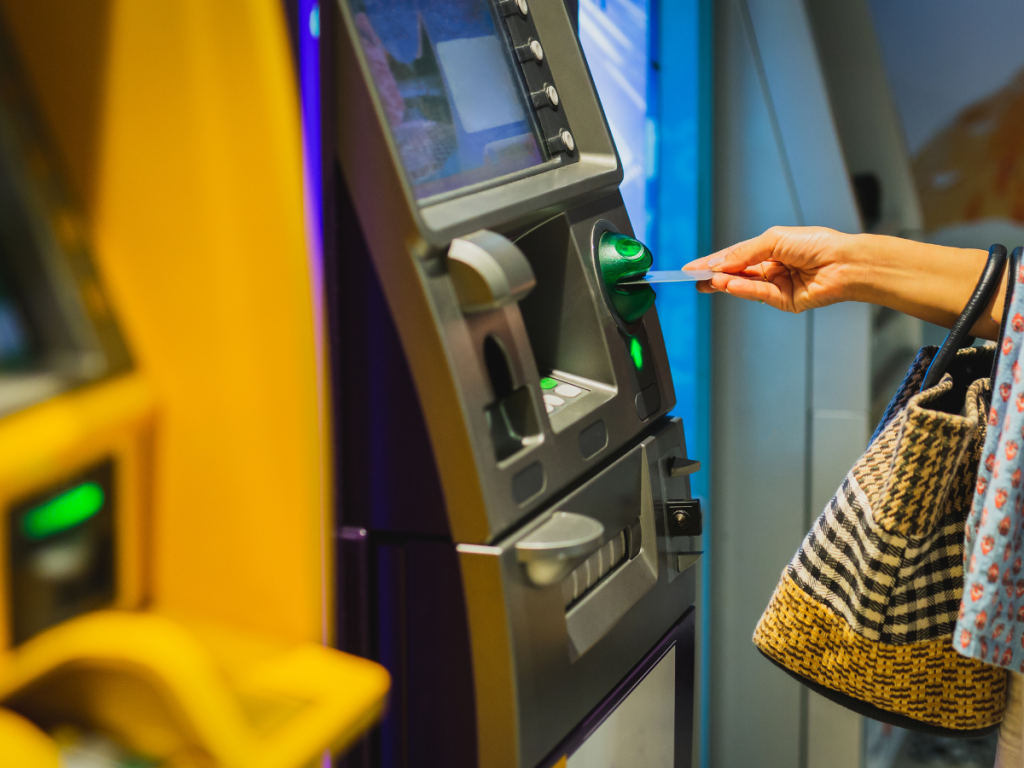
Several banks in the UAE allow customers to withdraw money by using their Emirates ID. 

You must bank with the bank and different banks have different rules. 

If you are an Emirates NBD customer. You can withdraw cash with your EID if you have the Emirates NBD mobile app on your phone. You’ll use the app to generate a code that you’ll then use at the ATM to withdraw the amount you need.

Mashreq Bank allows customers to open accounts, pay their bills, update their personal information and withdraw and deposit cash by just showing their Emirates ID.

When using a Mashreq ATM, the customer’s existing bank cards will appear on the ATM screen, allowing them to choose from a number of options including cash withdrawal, local and international transfers and chequebook and statement requests.

Emirates IDs can also be used for cash withdrawals and transfers through Al Hilal Bank’s ATMs.

How to use your Emirates ID to pay for fuel at petrol stations 

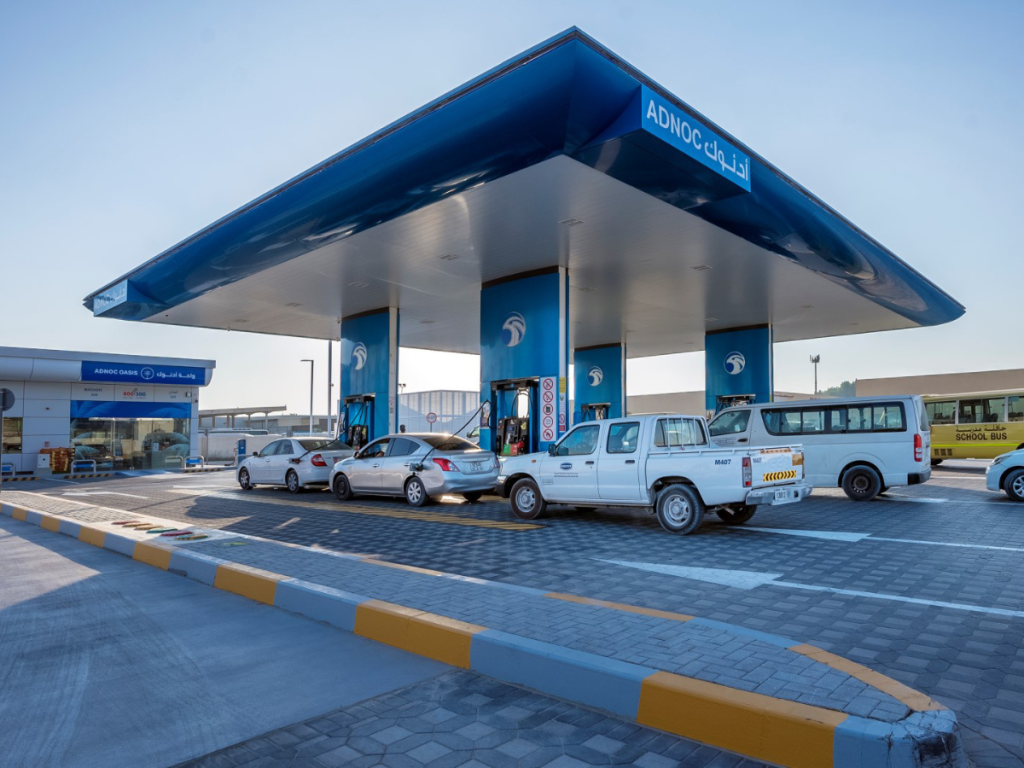
If you want to use your Emirates ID to pay for fuel you need to download an ADNOC Wallet. Once you have the app, your Emirates ID is linked to it and you can add money to your account.

When filling up your petrol tank at ADNOC petrol stations you can insert your EID into the card payment slot and follow the on-screen instructions to pay for your fuel.

You can also use your EID to pay for stuff at ADNOC Oasis convenience stores and car washes if you have an ADNOC Wallet.

How to use your Emirates ID as your health insurance card 

Don’t worry if you forget your health insurance card during your next visit to the doctor’s clinic as you can show your Emirates ID. Medical service providers can use EIDs to process medical insurance. 

How to use your Emirates ID at DXB airport’s e-gates

Smart gates are an automated self-service border control system. They use facial recognition technology to identify travellers and can be found at Terminal 3 of DXB airport. 

Smart gates match faces to data connected to immigration databases which will know if the traveller is a UAE National, GCC National, UAE resident or a visa-on-arrival guest.

If you want to use your Emirates ID to head through the smart gate then all you need to do is swipe your Emirates ID card and look into the green light at the gate. You must remove glasses, hats and face masks before passing through.

How to use your Emirates ID to get discounts 

Probably the most fun aspect of holding an Emirates ID is that it can unlock discounts across the UAE. 

Several hotels and attractions offer cut-price deals to residents and all you have to do is flash your EID. 

Want to know how to save by being a UAE resident? Check out Dubai resident deals.


Top 10 Most Popular Mental Health Hospitals In The U.S.

10 Most Popular Mental Health Hospitals In The U.S.

In terms of the most popular mental health hospitals in the U.S., there’s a long list, but some stand out. The one that jumps out is New Jersey’s Morristown Medical Center, the nation’s No. 1 mental health hospital for seven years in a row. Whether you’re looking to get help for yourself or for someone you care about, there are many mental health hospitals in the United States. Mental health is something many people try to avoid thinking about. And yet, a lot of Americans struggle with mental illness every day. It’s important to know where to go for help if you or someone you love is suffering.’

Top 10 Most Popular Mental Health Hospitals In The U.S.

Some of them are large and well-known, while others are small and relatively unknown. This post aims to give you a better idea of which mental health hospitals are the most popular in the U.S. So, read on for the top 10. Mental Health facilities across the United States provide care to patients with various mental disorders and behavioral problems. Although most mental health facilities offer psychiatric services, some also provide medical services, such as psychopharmacology. Some facilities have specialized units to treat different kinds of disorders. Others may provide various types of treatment services to patients, depending on their needs. As per the latest data, 1,250 mental health facilities provide psychiatric and behavioral services across the United States in 2015. These facilities had a total of 13,900 beds.

What are mental health hospitals?

Mental health hospitals are a type of hospital that specializes in treating mental health disorders. There are many types of mental health hospitals, but some are more common than others. Some examples include psychiatric hospitals, psychiatric units in regular hospitals, and psychiatric emergency rooms. Mental health hospitals have many different departments, each focusing on specific treatments. Some of these departments include medication, therapy, and behavioral therapy. These disorders, such as schizophrenia, bipolar disorder, or depression, can be severe. Some of these hospitals also treat patients diagnosed with other medical issues. For example, a psychiatric hospital may treat a patient diagnosed with cancer or heart disease. Inpatient psychiatric units in regular hospitals are not usually called “psychiatric hospitals,” but they provide psychiatric care.

Types of mental health hospitals

Whether you’re looking to get help for yourself or for someone you care about, there are many mental health hospitals in the United States. Some of them are large and well-known, while others are small and relatively unknown. Some of the most common types include:

General hospitals: General hospitals are generally small and provide a wide range of services. They are also the most affordable option for many people.

Psychiatric hospitals: Psychiatric hospitals are similar to general hospitals but specialize in treating mental illnesses. They also tend to be large and well-known.

Rehabilitation hospitals: Rehabilitation hospitals are often used to treat addiction, physical disabilities, and more. They’re also the largest type of mental health hospital in the country.

How do you find a mental health hospital?

There are several ways to find mental health hospitals, and here’s the most effective way. First, start by typing “mental health hospital” into Google. If you’re looking for “psychiatric” or “mental health,” you can also narrow your search results to include only those pages that are relevant to your search term. Second, you can check your search results only to show you the mental health hospitals near you. This can be helpful because many mental health hospitals are located in big cities or states. Third, you can narrow your search results by location. For example, if you’re looking for a mental health hospital in California, you can check your search results only to show you those in California. Last, you can narrow your search results by state. This will help you locate the nearest mental health hospital near you.

What to expect at a mental health hospital?

There are different levels of mental health care at various hospitals. While some offer outpatient treatment, others are designed for inpatient treatment. While some mental health hospitals are open 24/7, most operate between 8:30 a.m. and 6 p.m. You should know that many mental health hospitals are open-door institutions. This means that you are free to come and go as you please. In addition, some mental health hospitals are short-term facilities. They provide medical care for patients recovering from a specific condition or illness. You should also know that most mental health hospitals are not affiliated with a particular religion.

What happens if you are admitted to a mental health hospital?

When you’re admitted to a mental health hospital, you’ll likely undergo a battery of tests. These include bloodwork and other lab tests. You’ll likely undergo a battery of tests when may also ask you about your family history ing to your illness. Once you’re diagnosed, your doctors will make a treatment plan based on your condition. Your doctors may recommend medications, therapies, or alternative treatments. While some medications can help treat bipolar disorder, it can be difficult to find the right one for you. This is because each person with bipolar disorder responds differently to medications, and the right drug can be life-changing. If you’re considering taking medication, it’s important to talk with your doctor about what might work best for you. Mental health professionals use various methods to assess mental health and well-being. These include assessments of symptoms and functioning and subjective reports of mood, behavior, and life events.

Frequently asked questions about mental health hospitals

Q: Do you think all mental hospitals are equal?

A: They are not. The one in the Philippines is like a spa! Other ones are not as nice, but I wouldn’t say that all mental hospitals are the same.

Q: How can we help those in mental hospitals?

A: Many people in mental hospitals don’t know how to help themselves. They are locked up with no way to communicate or express themselves. Many would like to help themselves, but they have no idea how to do it.

Myths about mental health hospitals

1. Patients with mental illness have no rights.

2. Mental hospitals are the best place to heal mentally ill patients.

3. Mental hospitals are only for people who have committed a crime.
Conclusion

When someone is going through a difficult time, they can sometimes feel like they don’t know where to turn. It can be tough to ask for help or admit that you need help. That’s why there are so many different kinds of mental health hospitals out there. They’re designed to help people who are struggling. So, if you’re dealing with a major mental health problem, finding a hospital that can help is a great place to start.

The Secret Behind The World’s Most Expensive Coffee


The Disturbing Secret Behind the World’s Most Expensive Coffee

Kopi luwak is made from coffee beans plucked from civets’ feces. This is bad news for civets.

It’s the world’s most expensive coffee, and it’s made from poop. Or rather, it’s made from coffee beans that are partially digested and then pooped out by the civet, a catlike creature. A cup of kopi luwak, as it’s known, can sell for as much as $80 in the United States.

The Secret Behind The World’s Most Expensive Coffee
Captive civets are sometimes fed only coffee cherries, the fruit that produces coffee beans. In the wild, their diet includes fruit, insects, and reptiles.PHOTOGRAPH BY ULET IFANSASTI, GETTY IMAGES

Found in Southeast Asia and sub-Saharan Africa, the civet has a long tail like a monkey, face markings like a raccoon, and stripes or spots on its body. It plays an important role in the food chain, eating insects and small reptiles in addition to fruits like coffee cherries and mangoes, and being eaten in turn by leopards, large snakes, and crocodiles.

At first the civet coffee trade boded well for these creatures. In Indonesia, the Asian palm civet, which raids commercial fruit farms, is often seen as a pest, so the growth in the kopi luwak industry encouraged local people to protect civets for their valuable dung. Their digestive enzymes change the structure of proteins in the coffee beans, which removes some of the acidity to make a smoother cup of coffee.

But as civet coffee has gained popularity, and with Indonesia growing as a tourist destination where visitors want to see and interact with wildlife, more wild civets are being confined to cages on coffee plantations. In part, this is for coffee production, but it’s also so money can be made from civet-ogling tourists.

The Secret Behind The World’s Most Expensive Coffee
Civet dung, studded with partially digested coffee beans, used to be collected from the wild. Increasingly, civets are instead kept in cramped, unsanitary cages on coffee plantations.PHOTOGRAPH BY ULET IFANSASTI, GETTY IMAGES

Researchers from Oxford University’s Wildlife Conservation Research Unit and the London-based nonprofit World Animal Protection assessed the living conditions of nearly 50 wild civets held in cages at 16 plantations on Bali. The results, published Thursday in the journal Animal Welfare, paint a grim picture.

From the size and sanitation of the cages to the ability of their occupants to act like normal civets, every plantation the researchers visited failed basic animal welfare requirements. “Some of these cages were literally the tiniest—we would call them rabbit hutches. They’re absolutely soaked through with urine and droppings all over the place,” said Neil D’Cruze, one of the researchers.

Some of the civets were very thin, from being fed a restricted diet of only coffee cherries—the fruit that surrounds the coffee bean. Some were obese, from never being able to move around freely. And some were jacked up on caffeine, D’Cruze said.

But what he found most disturbing was the wire floor many of the animals were forced to stand, sit, and sleep on around the clock. “If you’re standing on that kind of wire mesh all the time, it’s going to cause sores and abrasions. They have nowhere to go to get off that flooring,” D’Cruze said. “It’s a constant, intense source of pain and discomfort.”

The Secret Behind The World’s Most Expensive Coffee


WOULD YOU DRINK COFFEE MADE WITH ANIMAL POOP?

This adorable tropical mammal possesses a unique quality: Its poop is an ingredient in the world’s most expensive coffee.

Additionally, many of the civets had no access to clean water and no opportunity to interact with other civets. And they were exposed to daytime noise from traffic and tourists, which is particularly disturbing for these nocturnal animals.

Wild or Caged: Who Knows?

All of this for a luxury item—and a second-rate one, at that. Part of what makes kopi luwak so special, experts say, is that wild civets pick and choose the choicest coffee cherries to eat. Keeping civets in cages and feeding them any old cherries leads to an inferior product.

Besides, says one coffee expert quoted in an article for the Specialty Coffee Association of America, the trade organization for gourmet coffee roasters and baristas, kopi luwak just isn’t that good to begin with. Although the civets’ digestive process does make the coffee smoother, it also removes the good acids and flavor that characterize a specialty cup of coffee.

The Secret Behind The World’s Most Expensive Coffee
A captive civet, likely taken from the wild, looks out from a wire cage where it is kept to produce kopi luwak, the world’s most expensive coffee.PHOTOGRAPH BY NICKY LOH, GETTY IMAGES FOR WSPA

There’s now no way to tell whether a bag of kopi luwak was made from wild or caged civets. A BBC undercover investigation revealed in 2013 how coffee from caged civets in inhumane conditions ends up labeled as wild civet coffee in Europe.

Even Tony Wild, the coffee trader who introduced kopi luwak to the West, warns against it in an article for the Guardian. It has become increasingly industrialized, abusive, and faked, he said.

No certification scheme exists to ensure that coffee labeled “wild” is actually that. And other coffee certifiers working to ensure environmentally responsible farming and production refuse to certify any kopi luwak whatsoever.

The Sustainable Agriculture Network standards, or SAN, which the New York-based Rainforest Alliance and other well-known coffee certifiers use to issue their stamps of approval, forbid the hunting and capture of wild animals on farms. The prohibition of caged civets is specifically singled out in the SAN guidelines for coffee in Indonesia.

UTZ, another major sustainable coffee certification standard, also forbids caged wildlife on farms and will not certify any kopi luwak.

Alex Morgan at the Rainforest Alliance, which uses SAN standards, says it’s too risky to certify kopi luwak. It’s just too hard to establish whether the beans are 100 percent wild-sourced or not.

“My personal advice is generally to avoid it,” he said. “More likely than not it’s going to be coming from a caged production landscape.”

This story was produced by National Geographic’s Special Investigations Unit, which focuses on wildlife crime and is made possible by grants from the BAND Foundation and the Woodtiger Fund. Read more stories from the SIU on Wildlife Watch. Send tips, feedback, and story ideas to ngwildlife@natgeo.com.

The Secret Behind The World’s Most Expensive Coffee

CIVETS LOVE ORGANIC SMELLS

African civets like to find things that smell strong—such as rotting fruit and pungent pangolins—then mark them with their own scent glands.

Difference Between Pressure Ulcer and Diabetic Ulcer

A diabetic ulcer is a sore that develops on the foot of a person with diabetes. A pressure ulcer is a sore that develops on a part of the body where there is a bony projection pressing against a firm surface.

Difference Between Pressure Ulcer and Diabetic Ulcer

 A diabetic ulcer is a sore that usually forms on the foot of a person who has diabetes, and which can become gangrenous leading to amputation of the limb.

The main symptom is the presence of a sore that is painful when touched. The sore also often has a discharge that can be foul- smelling. The sore on the foot often ulcerates and becomes infected, which can cause the foot to swell and become red in color. The infection can also cause you to have a fever if it is very bad.

A diabetic foot ulcer can become gangrenous and this infection can spread leading to amputation of the foot or even the leg. In extreme cases, a person can die from bacteremia (bacteria in the bloodstream) leading to septic shock and even death.
Diagnosis:

Diagnosis is by physical examination in which the integrity of the skin is checked and the entire foot, including your toes and toenails, are carefully examined for signs of injury or blistering of the skin. Doctors may also test the level of blood flow by measuring blood pressure in the arteries of the leg and foot using a Doppler probe. This can indicate if there are blood vessel problems that could be causing an ulcer to develop, or increase the likelihood of such a problem occurring.
Risk factors:

Having poorly controlled diabetes leading to diabetic neuropathy (damaged nerves) is the main risk factor for diabetic ulcers. High blood sugar levels damage the nerves and so you do not feel when you have a sore on your foot. Another risk factor is not being careful and checking your feet often, especially if you have bought new shoes which could give you a blister or callus which could become an ulcer. Peripheral artery disease in patients with diabetes is another risk factor resulting in compromised blood flow.

Treatment:

The ulcer often needs to be washed and any dead tissue removed in a process called debridement. Antibiotics may need to be given to stop any infection. Antibiotics such as clindamycin or penicillin or cephalexin may be used. Wearing special footwear can also help to prevent ulcers from becoming worse or to prevent further ulceration. Where blood vessels are blocked due to arterial disease, vascular surgery may be needed.


Difference Between Pressure Ulcer and Diabetic Ulcer

Pressure Ulcer
 
A pressure ulcer is also known as a decubitus ulcer and is a region of tissue that has become damaged and necrotic (dying). It most often happens where skin over bone is pressed against a hard surface for an extended time period.
Symptoms:

The area where the ulcer starts to develop first appears reddish and may feel warm or different from normal in some way. The skin then starts to blister and eventually the skin erodes away down into the subcutaneous layer and in extreme cases, down to the bone.
Complications:

Left untreated a pressure ulcer can result in osteomyelitis in which the bone becomes infected. Cellulitis is also a complication that can lead to bacteria in the bloodstream, which can even result in sepsis and death.

The diagnosis is based on a physical exam and the degree of the ulcer is staged according to how far it has developed, with stage 1 being the least severe and stage 4 being the most severe. Photos may be taken to track the progress of the wound.
 
Risk factors:

Risk factors for pressure ulcers include being older than 65, having a compromised circulatory system and being mainly immobile. Being bedridden for whatever reason is a very big risk factor for developing decubitus ulcers.
 
Treatment:

Treatment includes reducing pressure on the area by changing the position of the patient when they are bedridden or using some type of support such as pillows or other padding. Bedridden patients do need to be turned often because of the risk of pressure ulcers. The ulcers need to be cleaned with antiseptics and water, and any dead tissue needs to be removed. Wounds need to be bandaged and antibiotic ointments can be applied. In some cases, an antibiotic given internally may be needed. Ointments that contain polymyxin B, metronidazole or mupirocin can be used.


Difference between Diabetic ulcer and Pressure ulcer?

Definition

A diabetic ulcer is a sore that develops on the foot of a person with diabetes. A pressure ulcer is a sore that develops where bony projections are pushed against firm surfaces and occurs in bedridden or immobile patients.

Part of the body affected

A diabetic ulcer affects the feet. A pressure ulcer affects bony areas of the body like the hips.

Symptoms

The symptoms of a diabetic ulcer are a sore on the foot which often has a bad-smelling discharge and may be painful if touched, and the foot may swell. Symptoms of a pressure ulcer are a painful sore, blistered, red and swollen skin and ulceration.
 
Diagnosis

A diabetic ulcer is diagnosed by physical exam and Doppler flow of blood. A pressure ulcer is diagnosed by physical exam.
Risk factors

The risk factors for a diabetic ulcer include having diabetes with badly controlled blood sugar levels and having arterial disease. The risk factors for pressure ulcers are being elderly (over 65) and being largely immobile or bedridden.
Treatment

Diabetic ulcers are treated with antibiotics and removing dead tissue, and by controlling blood sugar levels and wearing the correct footwear. Pressure sores are treated by providing support and padding, moving the person often, using antibiotics and removing dead tissue.
Table Comparing Diabetic Ulcer and Pressure Ulcer


Summary of Diabetic Ulcer Vs. Pressure UlcerBoth diabetic and pressure ulcers are sores that if left untreated can lead to bacteremia, sepsis, and death.
Diabetic ulcers occur on the feet of the patient.
Pressure ulcers occur on the parts of the body where there are bony projections.
In both types of ulcers, wounds need to be cleaned, dead tissue removed and often antibiotics given.

  
Sharing is caring...

Cannabis Tabacco and Psychosis

"The cigarette industry did this a century ago, funding “independent” experts who sought to blur or discredit evidence that smoking caused cancer"


Cannabis Tabacco and Psychosis
pinterest

It's interesting to find this sentence in this article, a couple of years ago I questioned Bath University as to why they were part funding a course with Cancer Research UK to study the links between cannabis, tobacco and psychosis. It was a 2 year PhD research program that I was initially interested in applying for, but when a CRUK logo appeared in the reply email from my initial enquiry, I held back just long enough to ask myself if it was appropriate for CRUK to be part of such a project that has no focus on cancer whatsoever.


When I replied, I didn't mess about. I asked straight away why CRUK would be part of a PhD program that focuses on psychosis... I had nothing back.


I won't lie, my thought pattern from this was: THC seems to have a positive effect on some cancers, that's not good news for CRUK, CRUK devise a PhD program to further stigmatise THC, then CRUK could argue that cannabis isn't safe and use that to push for more funding for the never ending search for a cure for cancer. But then I'm a part time conspiracy theorist and my tinfoil hat is shiny...


Far be it for me to say cannabis can't make you crazy, work in the industry for 5 minutes and you'll see that for yourself.


Joking aside, psychosis is no laughing matter. but It's also not something that 'just happens' either. According to my non-professional knowledge, it tends to be triggered when someone is in a poor state of mental health.


What this article fails to mention is that ANYTHING can be that trigger, or that there are higher rate of psychosis from 'legal drugs' such as alcohol and tobacco. It also doesn't mention any cannabinoid other than THC, and as such I feel that this article completely misrepresents the whole plant by focusing on the negatives of one molecule.


Don't get me wrong, this COULD be a genuine article that has solid science behind it, but as this omits key information about cannabis as a whole and doesn't mention the anti-psychotic qualities of CBD, this article may well be focusing on the type of research from “independent” experts that the author warns us of.

Tolerance of cannabis is growing just as scientists show that it can cause insanity


Cannabis Tabacco and Psychosis
pinterest


Supporters of cannabis legalisation are like the tobacco companies denying the link between smoking and cancer


The singer Justin Bieber is promoting pre-rolled cannabis joints that he calls “Peaches”, the name of a song from an album. He is doing so in association with a Los Angeles-based company, Palms Partners, that specialises in selling seven-joint packs for $32 (£24) in California and Nevada. “I’m a fan of Palms and what they are doing by making cannabis approachable and helping to destigmatise it – especially for the many people who find it helpful for their mental health,” he says.


Bieber is one of a strange coalition seeking to legitimise cannabis (marijuana) for its health-giving properties or because they believe that criminalisation has failed and proved counter-productive. Online advertising for recreational cannabis in the US claims that it is an antidote for depression. Amazon, the largest delivery company in the world, is reportedly lobbying in Washington for marijuana’s legalisation at the federal level.


In Britain, the former Conservative Party leader William Hague argues in a newspaper column for a move “from seeing drug use as a criminal issue to a health issue, achieving a crucial change in culture”. He praises Portugal for reclassifying as a misdemeanour the possession and purchase of drugs for individual consumption.


Legalising and commercialising cannabis is well under way from Uruguay to Canada and in at least 10 states in the US. Paradoxically, this shift towards the toleration of cannabis as more or less harmless is taking place just as scientists conclusively prove the link between cannabis and psychosis (a less shocking word than “madness” or “insanity”, but the meaning is the same). Cause and effect is today as well established as it is between cigarette smoking and lung cancer.


“Numerous prospective studies have shown that cannabis use carries an increased risk of later schizophrenic-like psychosis,” says an article by Sir Robin Murray of the Institute of Psychiatry, Psychology and Neuroscience at King’s College London and Wayne Hall of the National Centre for Youth Substance Use Research at the University of Queensland. They cite a study showing that, though Portugal is held up as a pioneer in dealing with drugs, the rate of hospitalisation for psychotic disorders has increased 29-fold since decriminalisation 15 years ago. Another study calculates that between 30 per cent and 50 per cent of new cases of psychosis in London and Amsterdam would not have occurred if the individual affected had not been smoking high-potency cannabis.


Personal observation confirms this: doctors in mental hospitals have told me that they scarcely bother anymore to ask patients if they have taken cannabis, but simply assume it is the case. The situation has deteriorated as the proportion of THC, the psychoactive substance in cannabis producing the “high”, has risen precipitately. Once as low as 3 per cent, it has risen to 10 to 15 per cent in Europe and North America, though in Colorado, the first state to legalise recreational use, the THC can reach as high as 70 per cent. Those taking cannabis daily, particularly if they are young, face an escalating risk of permanent mental breakdown.


But if cannabis has already had its “tobacco moment”, when the damage it does is scientifically proven, why do celebrities like Justin Bieber want to destigmatise it and persuade consumers that it will improve their mental health?


Part of the boosterism in favour of cannabis plugs into its old association with a bohemian lifestyle and “the swinging Sixties”. But it is commercial pressure that is becoming far more important in lobbying for its legalisation. Businesses see they can make money out of it: projected legal sales of cannabis will be worth $66.3bn by 2025, according to a report. Big profits will pay for advertising and lobbying campaigns lauding the drug’s virtues and seeking to put in doubt or divert attention from the harm it causes.


The cigarette industry did this a century ago, funding “independent” experts who sought to blur or discredit evidence that smoking caused cancer. Governments were seduced by high tax revenues from tobacco sales and reluctant to do anything to curtail them. Hollywood stars such as John Wayne, Clark Gable and Spencer Tracy happily – and profitably – glamourised cigarettes, much as is happening to cannabis now.


Businesses seeking to emulate the tobacco companies at the height of their profitability have formed a bizarre de facto alliance with liberals and progressives, who are appalled by the disastrous mess created by government drug policy. The so-called “war on drugs” has demonstrably inflicted more misery in the US, certainly on the black community, than real military conflicts.


But an overreaction to government failure, provoking a dash in the opposite direction, has equal dangers. Those in favour of greater tolerance towards drugs are almost invariably thinking of cannabis as much less nasty than heroin and cocaine. But I have met psychiatrists, with long experience of dealing with drug victims of all sorts, who believe that cannabis is more dangerous than the other drugs because it has the potential to damage many more people.


About 3 million people take illicit drugs in England and Wales, of whom about 2.5 million consume cannabis, some 10 per cent on a daily basis in 2017-18, according to the review of drugs report by Dame Carol Black. Much of the cannabis is produced in the UK, sometimes by Vietnamese organised crime groups using slave labour. Most of the violence provoked by drugs is between the gangs who control the heroin and crack cocaine markets, which are worth about £5bn a year. Decriminalising drugs, notably cannabis, will not affect this sort of battle for territory and market share. Supply lines are very different between the different drug markets, with the heroin from Afghanistan wholesaled by Turkish and Pakistani gangs, and cocaine from Latin America controlled by Albanians.


The legalisation of cannabis will do nothing to hurt organised crime groups, but it will make the drug much more widely available. The idea by proponents of legalisation that the government will tightly regulate its quality and sale is naive. If the authorities cannot control it when it is illegal, they will be even less able to do so when it is legal. But legalisation – and even limited decriminalisation – will send a message that taking cannabis is a benign activity and does not do you or anybody else much harm. The deterrent effect of illegality will evaporate and the drug becomes no different than alcohol and tobacco.


Once commercially available, all the old persuasive tools formerly used by the cigarette industry swing into action as is happening unstoppably in the US. Celebrities like Justin Bieber will “destigmatise” the drug and give it the gloss of youth and fashion. Once, the victims of the tobacco companies coughed up their lungs unnoticed by the wider community, and this time round the victims of cannabis will disappear into mental hospitals without anybody taking much notice.


Share...

Why Poor People Stay Poor And Rich People Stay Rich

Why Poor People Stay Poor And Rich People Stay Rich

I’m sure that you already heard that poor people stay poor and rich people stay rich.

I’m also sure that you know at least several reasons for that.

But how do you think? What is the number one reason for that? Do you have any idea?

There’s one and in about 5 minutes you’ll know it. Just click PLAY button and watch this video to the end.

“That’s Why Poor People Stay Poor And Rich People Stay Rich”

Here’s the thing…

I’m not saying that everyone has to be rich or that being happy is impossible without being rich.

I’m just saying that if you struggle when it comes to money, then the very first step in order to change this situation is to change subconscious data.

Why change this data?

Because we all think, decide and take action based on what we hold in subconscious mind but please keep in mind that money problem in NOT always money.

How to change this data?

Please also keep in mind that all these modalities can help solve problems and achieve results in every area of life – not only financial one because – like you can heard in the video above – every single result is determined by data that was recorded in subconscious mind.

I hope that what I shared in this blog post will be valuable for you. If yes, then share this with other people and feel free to leave your thoughts in comments below.

Dubai Announces 10-Week Interval For Resident Taking Oxford-AstraZeneca Vaccine

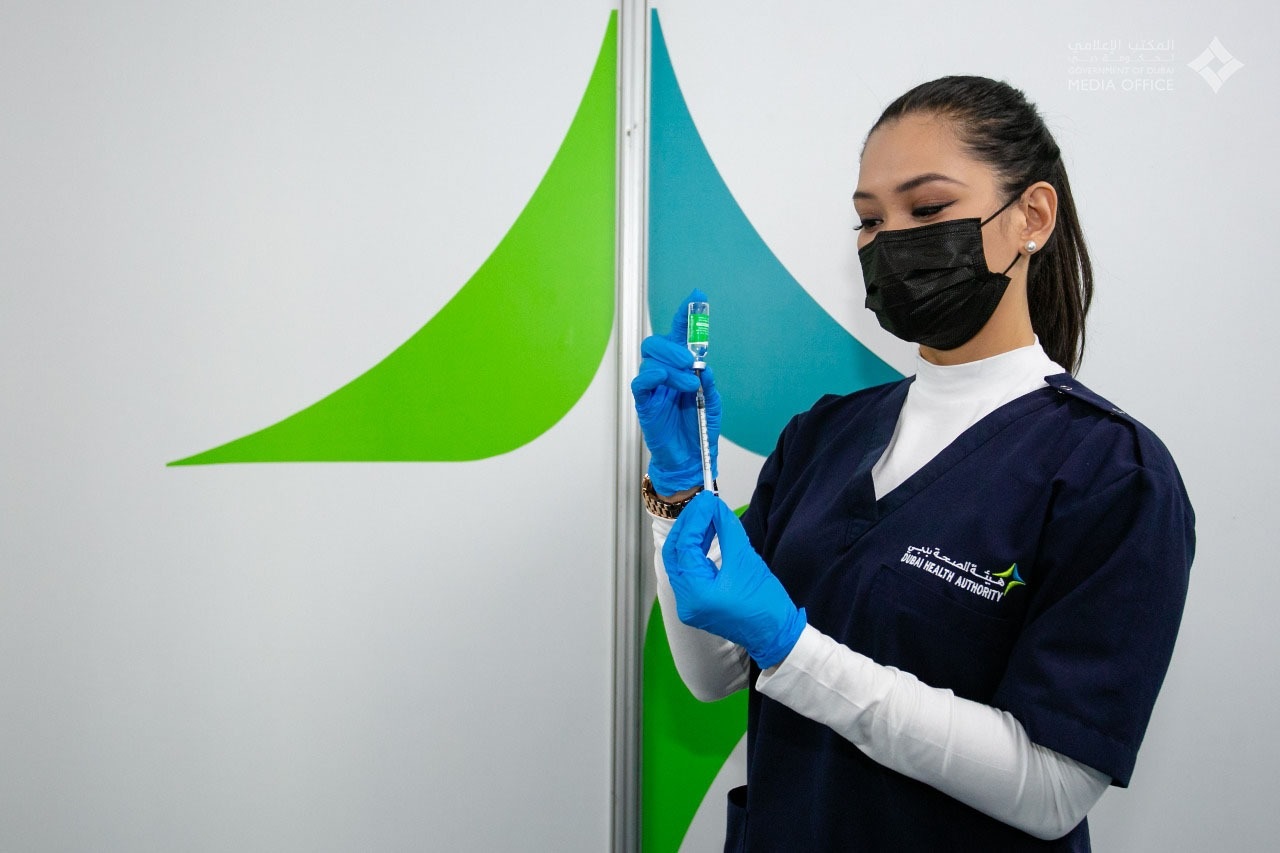
The Dubai Health Authority (DHA) announced Tuesday that there is now a 10-week interval for those taking the Oxford-AstraZeneca vaccine in Dubai.

“Based on recent studies from the University of Oxford on the Oxford-AstraZeneca vaccine and as per the recommendations of the WHO, DHA has approved a 10-week interval between the 1st & 2nd dose of the Oxford-AstraZeneca vaccine,” the statement reads.

DHA also explained that recent studies showed higher efficacy and higher acquired immunity when the dosing interval between the first and second doses is increased.

The health authority said they will send a text message to those who are set to receive the second dose to inform them of the date and location for their vaccination appointment.

It was only last February 2 when the UAE started offering the vaccine, as part of its national vaccination program.


How to Make Money on YouTube Without a Million Subscribers

YouTube stars are today’s self-made celebrities—people who have earned an audience by creating content geared toward teaching, entertaining, reviewing, and being awesome on the internet.

Most of these small-screen celebs do what they do just to do it, to scratch an itch for creating things and being in front of an audience.

Who makes the most money on YouTube?

According to Forbes, these 10 channels were the top earners on YouTube from June 2017 to June 2018:
Ryan's World, $22 million (22.4 million subscribers)
Jake Paul, $21.5 million (19.7 million subscribers)
Dude Perfect, $20 million (47.1 million subscribers)
DanTDM, $18.5 million (22.3 million subscribers)
Jeffree Star, $18 million (16.5 million subscribers)
Markiplier, $17.5 million (24.5 million subscribers)
VanossGaming, $17 million (24.9 million subscribers)
Jacksepticeye, $16 million (23 million subscribers
PewDiePie, $15.5 million (102 million subscribers)
Logan Paul, $14.5 million (19.9 million subscribers)

This list might leave you with a lot of questions about how these YouTube stars earned their fortunes. Let’s explore some of those questions.
Do you get paid for uploading videos on YouTube?

Content creators aren’t paid by YouTube for the videos they upload. Neither are videos monetized by default. For you to start making money on YouTube, you have to enable monetization in your YouTube account settings. From there, you have options to join the YouTube Partners Program or have your videos listed on YouTube Premium.
How do you make money from YouTube?

There are a few takeaways from Forbes’ list, putting aside the millions of dollars made and subscribers gained.

First, YouTube channels can be monetized even if they don’t have millions of subscribers. Your earning potential isn’t determined solely by the number of subscribers and views you have, but also by the level of engagement you generate, the niche you cater to, and the revenue channels you explore. That’s not to say subscriber count doesn’t matter 
Free Reading List: Video Marketing Tips and Tricks

Video marketing is a powerful tool you can’t afford to ignore. Get a crash course with our free, curated list of high-impact articles.Get the free reading list
Who’s going to watch your YouTube channel?

Building your own audience puts you in a great position to monetize content in a variety of ways. But you’ll only be able to take full advantage of the opportunities you have if you understand the makeup of your audience.

For many YouTubers looking to monetize, the more niche your channel, the better position you’ll be in to work with brands looking to target specific audiences (more on that later).


You'll want to pay close attention to:
The gender of your audience, to see if its skews toward one particular group.
The age range most of your audience falls into.
The geographic location—countries or cities—where your videos are being watched.
Your audience’s overall engagement, or “watch time.”

With this demographic information at hand, you’ll have a better understanding of your own audience and be able to work better with brands. All demographic insight can be pulled from your YouTube analytics, but to compare your own channel against others try a tool like Social Blade.

With that out of the way, we can start talking about the different ways your YouTube channel can make money.
How to make money on YouTube

Like learning how to make money on Instagram or via blogging, your audience might unlock your YouTube channel’s earning potential. But when you create multiple revenue streams, through side side hustles or businesses, it's easier to monetize.

Luckily, there are several ways to accomplish this—let's take a deeper look at each of these streams.
Become a YouTube Partner and earn money from ads.
Sell products or merchandise.
Crowdfund your next creative project.
Let your audience support your work through “fan funding.”
License your content to the media.
Work with brands as an influencer or affiliate.

On this episode of Shopify Masters, co-founders Patrick and Lewis from Patrick Adair Designs share the exact strategy they used to create and promote a YouTube video that earned a million views. Press play to hear their story and subscribe for weekly episodes.


1. Join the YouTube Partner Program and earn money from ads

The first revenue stream you’ll likely explore is ads. Whether you want to earn money on YouTube without creating videos or as a content creator, joining the YouTube Partners Program and setting up monetization is a vital step. You can apply for monetization once you’ve hit 1,000 subscribers and 4,000 watch hours over the past year.
How to enable monetization on YouTube
Sign in to the YouTube account you want to monetize.
Click the icon for your account in the top right corner.
Click YouTube Studio.
In the left menu, select Other Features > Monetization.
Read and agree to the YouTuber Partner Program terms.
Create a new AdSense account or connect an existing one to your channel. (You need an AdSense account to get paid.)
Set your monetization preferences.

Once that’s done, head back to the dashboard and click the Analytics tab on the left side. From there, you’ll need to choose Revenue from the tabs at the top, then scroll down to the chart Monthly Estimated Revenue to get an idea of your predicted revenue.
How many views do you need to make money?

The number of views you get doesn’t correlate to revenue earned. If your video gets thousands of views but no one watches or clicks the ad, you won’t make any money. This is because of YouTube’s criteria for billing advertisers: a viewer must click an ad or watch the ad in full (10, 15, or 30 seconds) for you to get paid.

However, with the release of YouTube Premium, you no longer need to rely on advertisers to create engaging or enticing ads to earn revenue.

Check out YouTube Premium

YouTube Premium is a paid membership program that allows fans to watch and support their favorite content creators without ads. For creators, not much changes, as they will get paid for content consumed by non-members on YouTube along with content on YouTube Premium.

Creators are paid for YouTube Premium based on how much members watch their content. Consider revenue earned from YouTube Premium as a secondary revenue stream in addition to what you’re already earning through ads.

While it’s easy to set up, earning money through advertising as a YouTube Partner is far from the most lucrative revenue stream you can create for yourself.
Why you should look beyond ads for revenue

YouTube recently received a lot of backlashdue to its decision to be more transparent about advertising on the platform and what qualifies as “advertiser friendly” content. Essentially, many creators feared that, due to the nature of their content, they would lose out on the ad revenue that helps support their channel.

According to YouTube, your content could get excluded from ad revenue if it includes:
Sexually suggestive content, including partial nudity and sexual humor
Violence, including displays of serious injury and events related to violent extremism
Inappropriate language, including harassment, profanity, and vulgar language
Promotion of drugs and regulated substances, including selling, use, and abuse of such items
Controversial or sensitive subjects and events, including subjects related to war, political conflicts, natural disasters, and tragedies, even if graphic imagery is not shown

But the reality is that YouTube has been demonetizing content that it doesn’t deem advertiser-friendly since 2012 via an automated process, without warning and without the content creator’s knowledge.

Now, the situation is actually better, as creators are notified when their content is flagged and can contest any time they feel a video was mistakenly excluded from YouTube’s advertising network.

Advertising might be a common means of generating passive income for creators, but the trade-off is that YouTube gets to keep around a 45% share of ad revenue.

In short, YouTubers should explore other revenue streams to sustain their creative hobby.

Below, we’ll share how to earn money from YouTube without AdSense.

2. Sell products or merchandise

There are plenty of products to sell that can help you make money through your YouTube channel. Selling merchandise—t-shirts, coffee mugs, tote bags, snapbacks, you name it—has a benefit beyond revenue.

Merchandise increases your exposure by putting your online brand and personality out into the offline world and deepens the relationship between you and your fans as they literally “buy” into what you're doing.


Roman Atwood sells a variety of merchandise in his store under his Smile More brand.

Selling branded swag is easier than it might seem at first.

You can order affordable designs tailored for specific products, like t-shirts, using freelance sites such as Fiverr.

And when it comes to handling orders, you can integrate your store with services such as Oberlo or one of the many print-on-demand providers that take care of shipping, fulfillment, and customer support, letting you reap all of the benefits of a dropshipping business that demands less effort on your part.

Alternatively, you can partner with an existing merchandising network for creators, such as DFTBA (Don’t Forget to Be Awesome). However, you’ll be competing with other YouTubers and have less control over adding products, offering discounts, integrating your content, and all the advantages that come with owning your own ecommerce site.

You can even go a step further by manufacturing and selling your own unique products and powering your business through your YouTube channel, like Luxy Hair did to sell its hair extensions with hair-related how-to video tutorials.

As a YouTuber who’s already earned an audience, you’ll have two advantages from the start that other store owners would be jealous of:
A content engine that consistently drives traffic to your store.
Your audience's trust, which you've earned by regularly serving them your own brand of content for free.

3. Crowdfund your next creative project

When money is all that stands between an idea and its execution, crowdfunding is a good way to make it happen.

Whether you need help buying better equipment, hiring actors, or covering other production costs, you can call upon your own audience and the crowdfunding community to pitch in if your idea is compelling enough.

Many successful crowdfunded creative projects tend to offer a sneak peak or “trailer” that gets people excited, so consider shooting a video explaining your project or offering a taste of what it'll be like, such as this popular Kickstarter for Kung Fury, a short film paying homage to ’80s action movies.


Popular crowdfunding sites with a proven track record of campaigns from YouTubers include:
Kickstarter: One of the most well-known crowdfunding sites, great for funding cool products and creative projects. Be sure to set an attainable funding goal because you’ll only secure it if you actually meet the goal you set.

Indiegogo: A Kickstarter alternative that offers more flexible funding options.
 
4. Let your audience support your work through “fan funding”

Similar to crowdfunding a project, you can also set up “fan funding” streams to source donations from your audience.

As a creator, you’re contributing your voice to the internet without forcing your audience to pay for admission. So, if you’re offering good content, your audience might be inclined to support you on an ongoing basis.

Many fan funding platforms offer creators another place for people to discover their content and a way to engage their most loyal audience and reward them for their support.
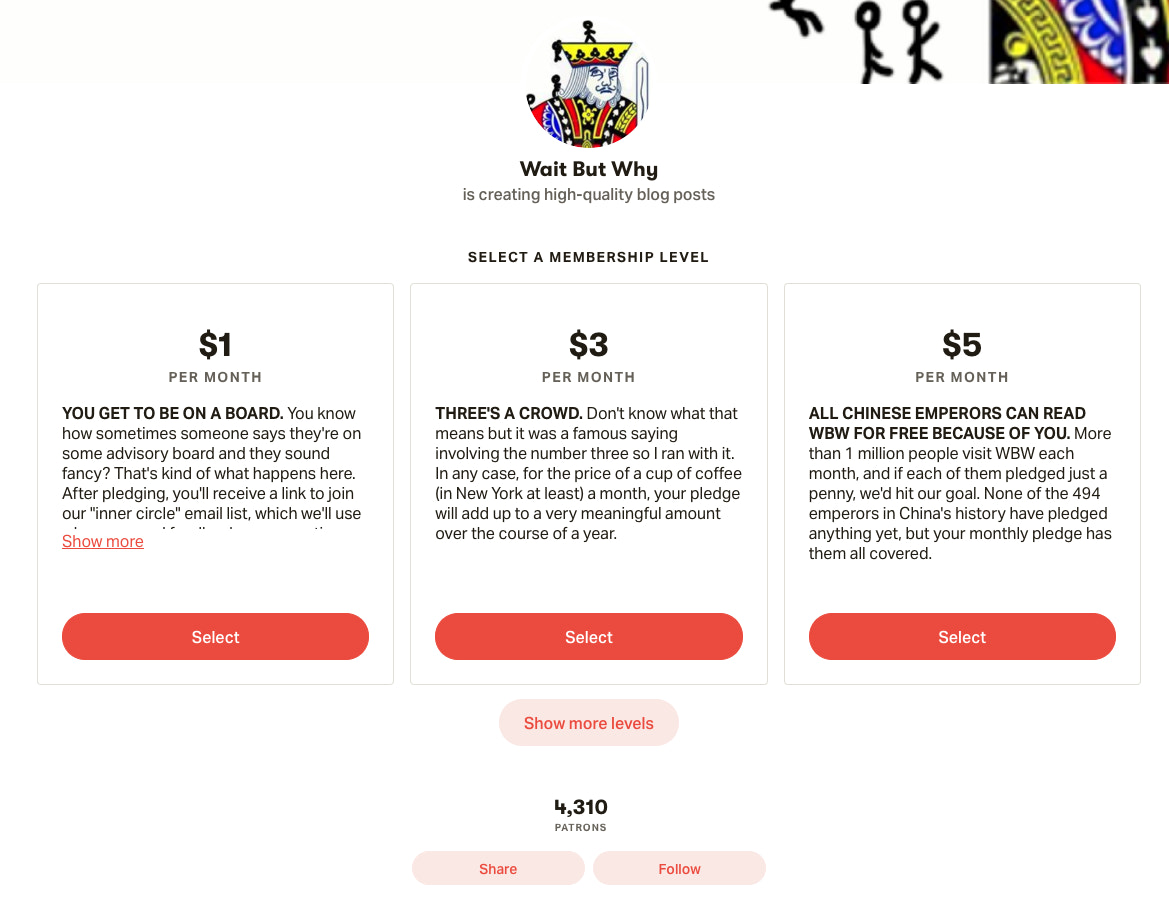


Wait But Why creates more long-form written content than YouTube videos, but is a great example of receiving support from the Patreon community.

If you choose the crowdfunding route, be sure to follow a couple of best practices. First, create transparency around how the money will be spent. This will get your fanbase invested in your story or mission, and they will literally buy into the value of your content. Second, offer enticing rewards for better pledges. The more you can make donors feel like they’re getting something exclusive for being a loyal fan, the more likely you are to get donations and higher pledges.

Some popular fan funding options include:
YouTube’s Super Chat: Super Chat is a feature used when going live on YouTube. It lets you create a tipping jar for your viewers to donate whenever and however much they feel like contributing. You’ll need to set up your YouTube account for advertising as outlined above.
Patreon: The membership platform that makes it easy for creators to get paid. Fans can subscribe to their favorite creators for as little as a dollar a month and receive exclusive rewards.
Tipeee: Lets you get a combination of both one-off and recurring donations

5. License your content to the media

If you happen to create a viral video with mass appeal—say, a funny clip featuring your dog—you can license your content in exchange for money.

TV news outlets, morning shows, online news sites, and other creators might reach out about rights to use your videos if they happen to go viral.

You can also list your videos in a marketplace, such as Juken Media, where your content will be easier for the right people to find and purchase.


When this video of a woman wearing a Chewbacca mask went viral, tons of media outlets wanted in.
 
6. Work with brands as an influencer or affiliate

Influencer marketing is going to be one of the advertising bedrocks of the next decade.Gary Vaynerchuk

Brands are investing more and more in influencer marketing, spending their typically large advertising budgets on influencers who’ve already won the loyalty of their audiences.

This creates a massive opportunity for you as a creator if you can negotiate the right deals.

Brendan Gahan, a YouTube marketing expert and influencer, recommends establishing your baseline flat fee by looking at the number of views your videos typically get and multiplying it by 5 to fifteen cents per view (which is around what many brands are willing to pay for views via YouTube ads).

Depending on your leverage—your audience demographics, content quality, and how unique and profitable your niche is—you might be able to negotiate a better deal if the brand is a good fit.

Becoming an influencer on YouTube is reported as the highest-paid platform for brand partnerships, according to Aqer. But to give you an idea of what you can potentially charge, a mid-level influencer charges a brand around $20 per 1,000 subscribers, or $2,000 per $100,000 followers, according to one study.

The key when partnering on brand-sponsored content is to be transparent about it, not endorsing anything you don’t actually like or believe in, and being upfront with your audience about why you’re doing it.

Here are just a handful of the many influencer marketplaces you can add your channel to and get discovered by brands both big and small:
Grapevine Logic: One of the more popular influencer marketplaces, you only need 1,000 followers to join.
Famebit: With a wide range of brands to work with, you might find a sponsorship opportunity you’ll be proud to be a part of. You need 5,000 followers to join.
Channel Pages: Partner with other YouTubers as well as brands.
Crowdtap: Complete small content creation “tasks” in exchange for money and other rewards. There’s no restriction on how many followers you need to join.

Some influencer marketplaces offer you free products, while others are known for having big brands who are willing to pay more. Capitalize on the opportunities that best suit your needs, but list yourself in as many places as you can to ensure maximum visibility for your channel.

Alternatively, you can also become an affiliate marketer for brands and make residual passive income through commissions from every sale you generate through your channel. This works especially well if you review products as part of your YouTube channel. Since there's no risk involved on the brand’s end (they only pay when they make sales), there's usually a low bar to getting started.

Popular affiliate programs include Click Bank(1% to 75% commission, depending on what the vendor sets) and Amazon's Affiliate network (earn up to 10% per sale). You can also reach out to brands in your niche that are running their own affiliate programs, which isn’t uncommon in the ecommerce space.
How to “sell” without annoying your audience

Many of the above strategies for monetizing involve promoting products or campaigns (e.g., crowdfunding a video series). But you’ll want to make sure your promotions don’t sabotage the integrity of your content.

“Selling out” is a real concern for a lot of creators. But if you never ask, you’ll never get.

There are a number of “placements” you can choose from for promoting products or campaigns.
Record a call to action in your videos

“If you liked this video, then hit the Like button and subscribe.”

Many YouTubers include a call to action along those lines at the end of their videos to grow their viewership. By suggesting the intended action you want them to take, your audience is more likely to take it.

You can adapt this approach to direct your audience’s attention to a revenue-generating opportunity.
Add well-timed YouTube cards to your videos

Whether it’s part of your deal with a brand or you’re promoting your own products, YouTube Cards offer an eye-catching way to get the attention of engaged viewers.

You can set them to pop up at just the right moment, when they’re most relevant and least distracting to increase their impact.


Add links in your video descriptions

You can funnel viewers to your store, Patreon page, Kickstarter campaign, or other revenue-focused part of your online presence by adding links to your video descriptions.


If you’re a video creator who wants to focus on generating revenue as an affiliate marketer, look at Unbox Therapy. Unbox Therapy specializes in product reviews, and it uses affiliate links in their video descriptions to make money via YouTube audiences. The channel is signed up as an Amazon affiliate. It places these unique links—pointing to the reviewed product on Amazon—in video descriptions. If the viewer purchases the item via clicking that link, the affiliate will earn a small percentage of revenue share paid to them by Amazon.

If you’re creating videos about your own products and you own or manage a Shopify store, you can incentivize new customers to buy your products with buy X get Y promotions or discounts.

Promote your offer on other platforms

Just because your content is hosted on YouTube doesn’t mean you shouldn’t be taking advantage of all the other distribution channels out there.

Spread the word about new campaigns or discounts on Twitter, Facebook, and any other profiles you own.

The more places your message lives, the greater the chance it’ll be seen. So it’s always a good idea to grow your following beyond YouTube with social media marketing.


Free Reading List: Social Media Marketing Tactics

Want to learn more about how social media can help drive sales? Download our free, curated list of high-impact articles.Get the free reading list
Are you ready to monetize your YouTube channel?

What compels most creators to create is rarely money. It’s the thought of making something for the world to enjoy.

But ironically, that puts them in a great position to actually make money in a content-obsessed world.

While the hard part for many businesses is getting and keeping their audience’s attention, YouTubers have already figured that bit out.

All that’s left is to get creative—to channel the entrepreneurial drive to explore ideas—with how you choose to monetize your passion.

Illustration by George Wylesol  
6 Best Legal Steroids For Bulking, Cutting, and Strength

 Anabolic steroids were first synthesized in the 1930’s as a means to treat various health conditions like hypogonadism, which is when the testes don’t produce enough natural testosterone for normal growth.


By the 1950’s, steroids found their way into professional bodybuilding and soon became an accepted norm.

From there, steroid use was seen in professional sports, amateur sports and the Olympics. In the 1980’s, athletic organizations around the world began to test for and ban steroids.

Eventually, anabolic steroids became illegal in the United States in 1990 when Congress made them a Schedule III controlled substance with stiff penalties in the form of fines and jail time.

Despite becoming illegal, steroid manufacturers went underground to continue supplying a growing demand throughout the world. There’s no denying the benefits of steroids.

From the strength and muscle mass to a ripped body and enhanced muscular conditioning, steroids help users dramatically transform their physiques.

Unfortunately, steroid usage can also cause serious side effects like heart disease, liver disease, kidney disease, and various forms of cancer.

With steroids being illegal and unsafe for many, aspiring weightlifters and bodybuilders are turning to legal alternatives to bulk, cut, and increase muscular strength.

If you are looking for safe options to shred fat, put on mass, or bust through plateaus then check out the 6 best legal steroids on the market:

Best Steroids for Bulking

Bulking is the phase when you are trying to build muscle mass or put on “size.” Typically, this requires an increase in calories, more protein and an appropriate workout that targets heavier weights.

Additionally, there are a few awesome supplements that can go a long way in helping you bulk up:
D-Bal


D-Bal was created to provide users with a safe alternative to Dianabol. It increases nitrogen retention, improves protein synthesis, and helps users to put on mass quickly and cleanly. D-Bal also has the following benefits:

Increases strength
Increases stamina
Increases Focus

Unlike Dianabol, D-Bal will not elevate your blood pressure or cause any harmful effects on your liver. Users are to take one serving (3 capsules) per day, roughly 45 minutes after a workout. D-Bal is to be taken for roughly 2 months and then cycled off for 10 days.

Trenorol


Trenerol is the legal alternative to the king of all steroids – trenbolone. It’s designed to aid in muscle growth and to pack on the size during your bulking phase.

Trenerol increases protein synthesis and nitrogen retention, which helps to add muscle mass.

Additionally, trenerol increases red blood cell production, which boosts the amount of oxygen to your muscles.

This supplement can also benefit users in the following ways:
Enhanced vascularity
Lose fat without losing mass
Increased strength
Increased stamina
Doesn’t retain water

One serving (3 capsules) of Trenorol is to be taken 45 minutes prior to working out. It’s also recommended to cycle off this supplement for 10 days once you have completed a 2-month cycle of usage.

Best Steroids for Cutting

The cutting phase is when you try to shred up by losing body fat without losing muscle mass. It’s the phase that requires eating fewer calories in order to get the ripped physique that we all dream of.

Typically, the cutting phase also requires increased cardio efforts to aid in the loss of body fat.

The following supplements can greatly assist during this phase:
Clenbutrol


Clenbutrol is a powerful thermogenic that helps to burn fat and increase your metabolism. It’s a safe alternative to clenbuterol as it also helps to improve your cardio efforts by increasing oxygen levels and oxygen transportation throughout the body.

With Clenbutrol, users can shred the body fat, while preserving lean muscle.

This supplement also helps to:
Increase endurance
Improve stamina
Improve physical performance

Ideally, users will take this supplement for 2-3 months before cycling off for 1-2 weeks. The optimal time for usage is 45 minutes prior to working out.

Anvarol


Anvarol was created to provide users with a safe and legal alternative to the steroid – Anavar. This supplement stimulates the phosphocreatine synthesis within your muscles and helps to retain lean muscle while shredding fat.

Anvarol provides you with ongoing energy to blast through your workouts while improving strength and endurance.

It also has the following benefits:
Explosive power
Blasts visceral fat
Enhanced vascularity
Improved muscular density

Anvarol is to be taken once per day, approximately 15 minutes after your workout. For optimal results, take this supplement for 2-3 months and then cycle off for roughly a week and a half.

Best Steroids Strength

Muscular strength can be defined as the maximum amount of force your muscles can produce in a single effort. There are many variables that go into training for strength like exercise selection and order, number of sets and reps, weight used, and how much rest between sets.

If you are looking to improve your overall strength then you will need to adjust one of those variables.

Additionally, supplements like Testo Max and Winsol can go a long way in providing the boost you need to break through plateaus and crush even the hardest of workouts.
Testo Max


Testo Max is a safe alternative to synthetic testosterone, which is the origin and measuring stick of all steroids. Made from the Tribulus Terrestris plant, Testo Max boosts your natural testosterone levels.

This translates into some awesome strength gains and the following benefits:
Increased muscle mass
Increased stamina
Faster recovery
Enhanced performance in the gym
Enhanced sex drive

Testo Max is to be taken 20 minutes before breakfast and for 2-3 months. After that duration, cycle off for 1-2 weeks.

Winsol


Winsol was created as a safe alternative to the popular steroid – Winstrol. It’s ideal for the cutting phase to keep your lean muscle while losing fat. Even more impressive, is that this supplement can help you build strength while cutting. So, not only can you chisel your body, but you will increase strength at the same time.

Additionally, Winsol can also provide the following benefits:
Enhanced vascularity
Increased Endurance
Increased maximum power
Increased speed and agility

Winsol is to be taken with water during your main meal of the day. Use this supplement for 2-3 months before cycling off for 1-2 weeks.

Final Words on Safe Steroid Alternatives

Keep in mind, all of these supplements require that you have a sound diet and exercise program. Make sure that you are consistent in your workouts, diet, and supplementation.

Inconsistencies in any of these areas can disrupt your progress or impede your efforts to reach your goals. If you have never taken supplements before, or are unsure about adverse reactions, consult your medical professional to ensure personal health and safety.

Man Charged With Drug Offenses Because of $324K Smelt Like Cocaine

A 46-year-old man was arrested and charged on drug offenses because his stash of $324,000 smelt like cocaine. 


Gerald Flores was pulled over by police in Bergen, New Jersey in June and when officers searched his SUV they discovered seven bundles of cash wrapped in plastic and placed in a hidden compartment of his vehicle, Bergen County prosecutor Gurbir S. Grewal in the case claimed.

After counting the money the authorities not only realised it was over a quarter of a million dollars, it also smelled strongly of cocaine.

Explaining the odor in the civil forfeiture complaint, which was filed this month Grewal wrote: “While counting the currency, it gave off a distinct odor of cocaine.”


No drugs were found during the search, but despite this Flores was still charged with transporting or possessing property believed to be derived from criminal activity. This isn’t believed to have been a completely random stop.

Flores was reportedly known to police, with detectives receiving “tips” that he was allegedly distributing drugs as long ago as April, nj.com reports. He was pulled over in Hackensack for an alleged traffic violation and told officers he was visiting his daughter.

Despite this, he “appeared nervous” when approached by the officers, who claimed “his hands began to tremble and he struggled to maintain eye contact,” as they questioned him.

When a search of his SUV took place a sniffer dog, aka a K-9, discovered the cash and provided a “positive reaction to the odor of narcotics”.

In addition to the $324,000, another $4,040 was found in other bundles around the vehicle with prosecutors claiming the cash were used to commit drug crimes.

According to a 2009 report, traces of cocaine can be found on 90% of bank notes in the US.

Copyright

NoelGRSr 2016