Introduction
Social media is filled with bold claims about “natural Viagra” foods that supposedly boost testosterone, fertility, and sexual performance. While no food can replace prescription medication or guarantee results, certain nutrient-rich foods do provide vitamins and minerals that support overall reproductive health.
Among the most commonly recommended are oysters, pumpkin seeds, and berries. Here’s what science says about these popular superfoods.
The Three Foods Everyone Is Talking About
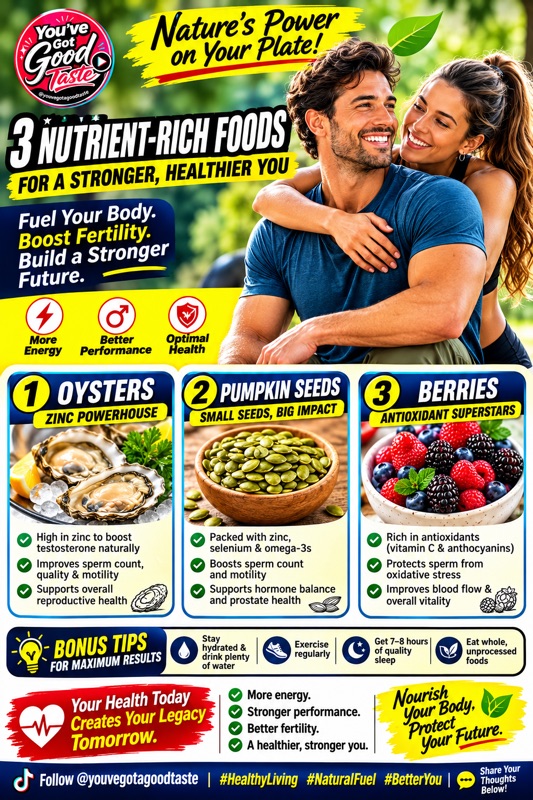
1. Oysters – A Zinc Powerhouse
Oysters are one of the richest natural sources of zinc, an essential mineral involved in many bodily functions, including reproductive health.
Potential benefits include:
- Supports normal testosterone production in men with adequate zinc levels.
- Helps maintain healthy sperm production and quality.
- Contributes to normal immune system function.
However, eating oysters alone will not dramatically increase testosterone or cure fertility issues.
2. Pumpkin Seeds – Tiny Seeds, Big Nutrition
Pumpkin seeds are loaded with:
- Zinc
- Magnesium
- Selenium
- Healthy fats
- Plant protein
These nutrients help support:
- Hormone balance
- Prostate health
- Heart health
- Overall wellness
Pumpkin seeds are a healthy addition to a balanced diet, but they are not a miracle fertility treatment.
3. Berries – Antioxidant Superstars
Blueberries, strawberries, raspberries, and blackberries are rich in antioxidants, including vitamin C and anthocyanins.
These compounds help:
- Protect cells from oxidative stress.
- Support blood vessel health.
- Promote overall cardiovascular wellness.
Since good circulation plays an important role in sexual health, berries can be a valuable part of a healthy lifestyle.
Healthy Habits Matter More Than Any Single Food
Nutrition is only one piece of the puzzle. Experts generally recommend:
- Drink plenty of water.
- Exercise regularly.
- Maintain a healthy weight.
- Sleep 7–9 hours each night.
- Avoid smoking and excessive alcohol.
- Eat a balanced diet rich in fruits, vegetables, whole grains, lean protein, and healthy fats.
These habits have a much greater impact on long-term health than relying on any single “superfood.”
Can These Foods Replace Medication?
The simple answer is no.
Despite the nickname “Nature’s Viagra,” there is no scientific evidence that oysters, pumpkin seeds, or berries work like prescription medications for erectile dysfunction.
If someone experiences ongoing fertility problems, low libido, or erectile dysfunction, it’s important to seek medical advice. These conditions can sometimes be linked to diabetes, cardiovascular disease, hormonal disorders, or other underlying health issues that require professional evaluation.
Why This Topic Matters
Good nutrition supports overall health, and a healthy body is more likely to function at its best. While there are no miracle foods, consistently making healthier food choices can contribute to better energy, improved wellness, and reproductive health over time.
Your Commentary
Social media headlines often exaggerate health claims to grab attention. Instead of searching for a magic food, focus on building healthy daily habits. Oysters, pumpkin seeds, and berries are excellent foods to include in your diet—but they work best as part of an overall healthy lifestyle, not as a replacement for medical treatment or a balanced nutrition plan.
Conclusion
There is no “natural Viagra” hidden in your kitchen, but there are foods that nourish your body and support your health. A balanced diet, regular exercise, quality sleep, and proper medical care remain the strongest foundation for better wellness and reproductive health.
Follow: @youvegotagoodtaste
Hashtags:
#MensHealth #HealthyEating #Nutrition #Wellness #HealthyLifestyle #Superfoods #MaleHealth #Fitness #HealthTips #YouveGotGoodTaste #SideEffect
Share your thoughts respectfully in the comments below.